


Compass Learning

KS4 & Post-16 Qualifications

Compass Learning builds qualification pathways around each learner's starting point, interests and future goals. Academic, creative and practical learning can sit alongside mentoring within one coordinated programme, helping young people rebuild confidence, maintain educational continuity and work towards recognised achievement.

01

Functional Skills English and Maths — NOCN

NOCN logo

These qualifications develop practical English and maths for everyday life, further learning and employment. Available levels are Entry Levels 1, 2 and 3, followed by Levels 1 and 2. Compass confirms the appropriate level and available delivery arrangements during assessment.

Qualification levelsEntry Level 1 to Level 2
  • Entry Level 1
  • Entry Level 2
  • Entry Level 3
  • Level 1
  • Level 2

The appropriate level and delivery arrangements are confirmed during assessment.

English and Maths contentWhat each subject covers, and how delivery works

English

Reading, writing and communication

Reading and understanding information, writing clearly for different purposes, and speaking, listening and communicating. Practical learning may include understanding instructions, writing emails and applications, discussing ideas and communicating confidently.

Separate components

English includes separate reading, writing, and speaking, listening and communicating requirements.

Maths

Number, measure, shape and data

Applying number skills, measures, shape and data to practical situations. Learning may include money, budgeting, time, measurements and interpreting information, with content and complexity matched to the level.

How delivery works

  • Initial assessment identifies the starting point and learning priorities.
  • Tutors use a centralised curriculum with personalised adaptations.
  • Learning is linked to practical situations and future goals.
  • Progress and readiness for assessment are reviewed regularly.

We arrange exam entry and access arrangements

Compass Learning coordinates exam arrangements, reducing the administrative burden for commissioners and helping learners and families feel prepared. We arrange entries, liaise with suitable assessment centres and provide clear information about assessment dates, locations and what to expect. We also coordinate relevant exam access arrangements with the centre and appropriate professionals, subject to evidence and approval requirements.

Remote assessment may be available where the qualification, centre approval and invigilation requirements permit it. 

02

Arts Award

Trinity College LondonArts Award logo

Arts Award is a creative route that can help learners develop confidence, practical skills, reflection and the ability to share their achievements. Learners explore creative activities, develop their own practice, learn about artists and creative professionals, and record and reflect on their achievements. Leadership and project responsibilities develop at the higher levels.

Progression levelsFrom Discover through to Gold

Discover

Introductory arts certificate

Explore

Entry Level 3

Regulated qualification

Bronze

Level 1

Regulated qualification

Silver

Level 2

Regulated qualification

Gold

Level 3

Regulated qualification

The level is selected according to age eligibility, experience, interests and support needs. Learners do not automatically need to complete every level in sequence.

Possible activitiesAvailability depends on tutor expertise, resources and assessment arrangements
Visual artCraftsPhotographyFilmDigital mediaMusicDramaDance

Official Arts Award information ↗

03

NOCN Skills for Employment, Training and Personal Development

NOCN logo

This pathway combines personal development, employability and vocational learning. Routes may include Awards, Certificates and Diplomas at Entry Level 3, Level 1 and Level 2, subject to the approved offer.

Qualification level and qualification size are different things: an Award is a smaller programme than a Certificate or Diploma — it is not itself a level. Units are selected to form a valid qualification programme; an unrestricted combination of activities does not automatically earn an Award.

Explore learning areas and example unit content

The descriptions below are indicative content, not exact unit titles, and do not guarantee that every unit is available at every level.

Personal development and independence

Communication, personal goals, confidence, managing everyday responsibilities and making decisions.

Example activities: Planning a routine, organising a task, or practising how to ask for help.

Preparation for employment

Exploring jobs, teamwork, managing time, workplace expectations and preparing for work experience.

Example activities: Researching a role, practising an interview, or reflecting on an employer encounter.

Business and administration

Handling information, organising documents, communicating with customers and completing office tasks.

Example activities: Drafting an email, creating a presentation, practising a reception conversation, or planning an enterprise project.

Digital skills

Using technology for learning and work, finding information, communicating online and staying safe.

Example activities: Documents, spreadsheets, presentations, or digital creative projects, according to the selected units.

Creative skills

Art, craft, photography and digital production. Learners plan and produce a creative piece, document their process and evaluate the result. These NOCN units are separate from the Arts Award pathway.

Example activities: Planning and producing a creative piece, documenting the process, and evaluating the result.

Cooking and food preparation

Kitchen safety, hygiene, preparing ingredients and making simple food. Practical delivery requires suitable facilities and supervision.

Example activities: Kitchen safety routines, ingredient preparation, and producing a simple dish.

Hair and beauty

Introductory activities such as hair plaiting, hand care, nail art or basic make-up, alongside hygiene, preparation and client communication. Specific units require suitable expertise, equipment and assessment conditions.

Example activities: Hair plaiting, hand care, nail art, or basic make-up with hygiene and preparation practice.

Construction and practical trades

Introductory practical tasks involving materials, tools and safe working. Examples may include painting, decorating, tiling or basic carpentry, depending on the selected units and available specialist provision.

Example activities: Painting, decorating, tiling, or basic carpentry tasks with safe tool use.

Outdoor learning and horticulture

Planting, growing, garden care and using equipment safely, with suitable outdoor facilities.

Example activities: Planting, growing, garden care, and safe equipment use.

Where learning takes place

The right setting depends on the activity, the learner and the unit requirements.

Home, school or community venue

Most suitable activities can take place at home, in school or at approved community venues. Some tasks require group interaction, specialist facilities or workplace evidence.

Specialist practical units

Some units, such as hair & beauty, construction, and animal care are available only in certain areas through suitable delivery partners. Specialist practical units cannot automatically be completed at home or online. However, we will always endeavour to find and assess a suitable delivery partner near to the young person's home to support them with accessing this.

Adapted to Learner

All activities depend on the learner's needs, the selected unit requirements, staff expertise, facilities and agreed risk assessments.

Qualifications can connect learning with real settings

Where appropriate, structured activity can support Arts Award or relevant NOCN outcomes while developing communication, teamwork, independence and preparation for the future.

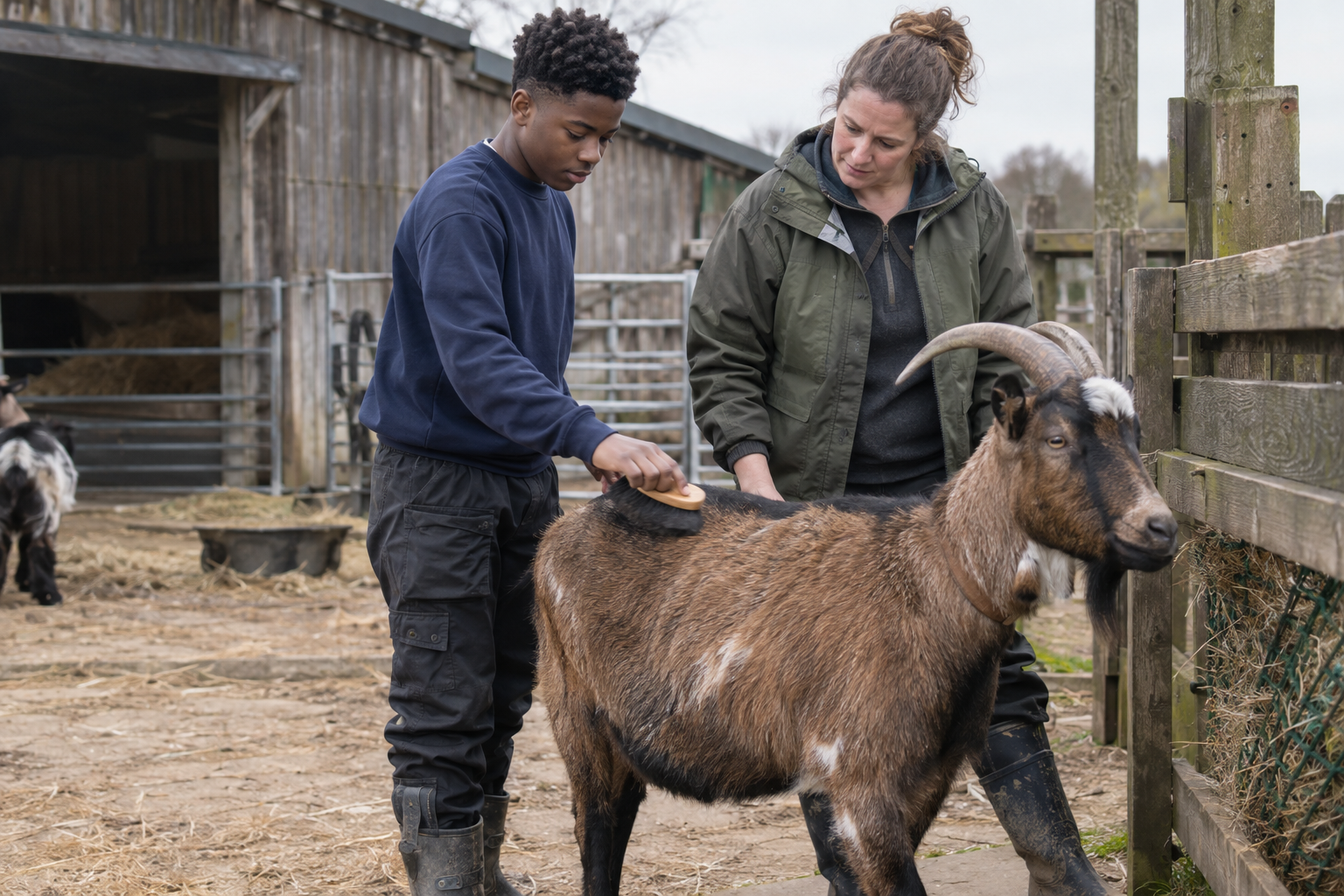
Farms and animal care

Farms and animal care

Suitable approved settings may support routine, responsibility, wellbeing and employability outcomes, with welfare procedures and individual risk controls in place.

Music and creative spaces

Music and creative spaces

Studio and creative activity may support Arts Award or relevant personal development and employability units where facilities and assessment arrangements are suitable.

Kitchens and hospitality

Kitchens and hospitality

Practical activity may support relevant NOCN units in hospitality, catering, employability and personal development where supervision and facilities are appropriate.

Employer and community experiences

Employer and community experiences

Structured encounters can provide evidence of communication, teamwork, independence and preparation for work when mapped to agreed outcomes.

Specific units, settings, assessment and certification depend on approval, learner suitability, programme design, evidence requirements, location, partner availability and centre capacity. Every proposed partner setting is fully risk assessed and approved before attendance, and the learner attends with a Compass mentor.

How community learning is selected and managed →

Assessment and programme length

How progress is evidenced and how long a programme might take.

How assessment works

NOCN skills qualifications use evidence against the selected units' assessment criteria, which may include practical tasks, observation, discussion, written work and portfolios.

Arts Award and Functional Skills timescales are agreed individually. Qualification achievement depends on meeting the relevant assessment requirements.

Entry 3 Award — planning guide

60 hours of total qualification time

For the introductory Entry 3 Award, 60 hours of total qualification time is a planning guide covering guided and independent learning. A 12-week programme with five relevant learning hours per week is one possible model, not a guaranteed completion period or a universal minimum placement. We therefore advise that for programmes that involve multiple accredited qualifications, a placement of 15 hours per week is commissioned. 

What you receive

A managed qualification pathway, not a set of disconnected sessions.

An agreed qualification route, level and intended outcomes
A named Programme Lead
Personalised teaching and support
Six-weekly progress reviews
Assessment and exam coordination
Clear confirmation of any additional charges

Discuss the right pathway for your learner

Tell us about the young person's year group, interests and goals, and we will advise on the most suitable qualification route, level and delivery arrangements.